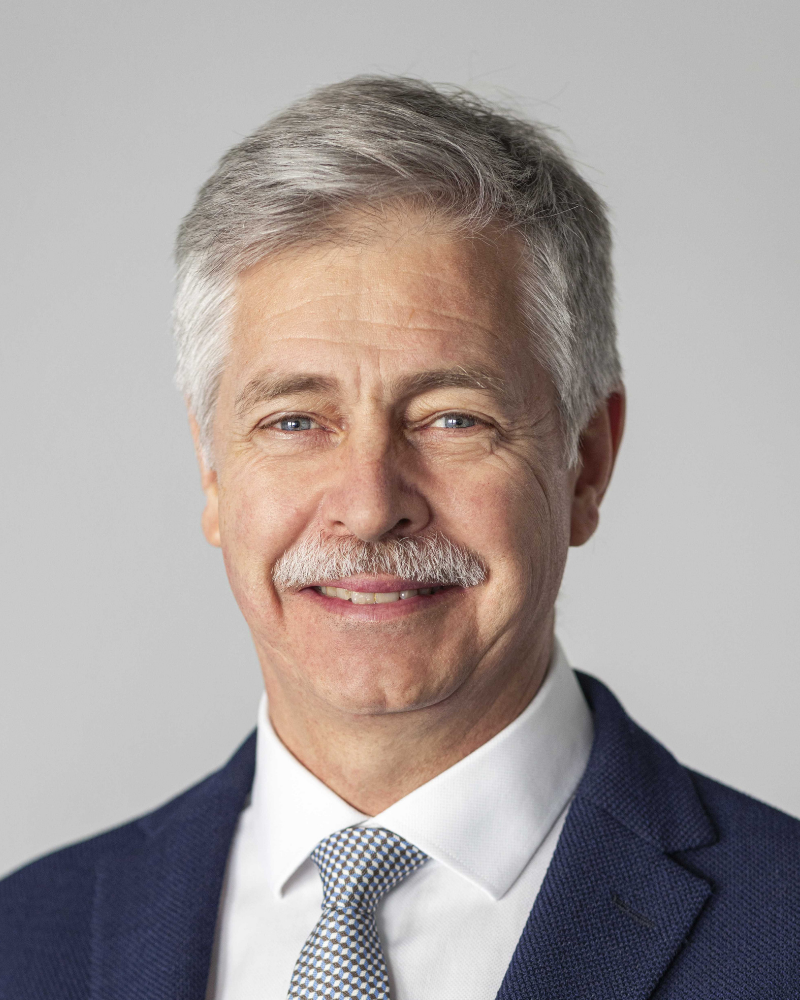
Dr. Marius Bredell
Oral and Maxillofacial Surgeon | Head and Neck Surgery & Reconstruction
Dr. Marius Bredell is a specialist in Oral and Maxillofacial Surgery with extensive experience in head and neck tumor surgery, microsurgical reconstruction, and advanced temporomandibular joint replacement. He completed his training in dentistry and medicine in South Africa and specialized in Oral and Maxillofacial Surgery at the University of Pretoria.
He served for several years as a consultant at the University of Pretoria and the Medical University of South Africa before joining the University Hospital Zurich in 2006. During a decade at Zürich, Dr. Bredell focused on complex head and neck oncologic surgery, microsurgical reconstruction, and computer-assisted surgical planning, including TMJ replacement.
Dr. Bredell founded and organized a yearly international course on head and neck reconstruction and surgical facial access, now conducted under the AO CMF framework. He has participated in multiple national and European research initiatives and led clinical research on the prognostic impact of tumor hypoxia within multidisciplinary oncology projects.
Since 2017, he has been in private practice near Zürich, continuing a broad surgical scope in maxillofacial surgery. He is the author or co-author of over 50 peer-reviewed publications, lectures internationally, and serves as a Fellow of the European Board of Cranio-Maxillo-Facial Surgery and an active examiner for the International Board for Certification of Maxillofacial and Oral Surgeons.
All Sessions by Dr. Marius Bredell
Keynote - "Destructed TMJ, how do we correct the form and function? "
Destruction of the TMJ has many reasons. Trauma, inflammatory disease, and tumors are the main reasons for the often painful but also functional debilitation process that may have a profound psychological influence on a patient, mostly due to chronic pain, limiting the joy of eating, and the prolonged process before functional rehabilitation can take place. The reason for the destructive process, as well as the functional disturbance, dictates the process of conservative management, minimally invasive surgery, as well as more invasive reconstructive interventions. Conservative management, where possible, should be the first line of treatment in cases where ablative surgery is not indicated. Too early an intervention and too many surgical interventions may be detrimental to the healing process and may accelerate the destructive process with an increase in chronic pain. When this line of treatment has been exhausted, depending on the functional and structural deficit, reconstructive procedures can be considered. When the condyle could be stabilised, rather than use it as a base to correct the occlusion by orthognathic surgery procedures, or even utilize osseodistraction. When ablative surgery is indicated or if the measures mentioned before have failed, consideration should be given to more definitive reconstructive options like free bone transplants, free vascular tissue transfer, or, as a last option, total joint replacement. It is imperative to consider all treatment options, based on the underlying pathology, structures that may still be utilized, and the influence of previous and future treatment that may influence your reconstructive efforts. This presentation will walk you through the minefield of the destructed TMJ, giving guidelines based on the literature and a wide base of experience and case presentations.