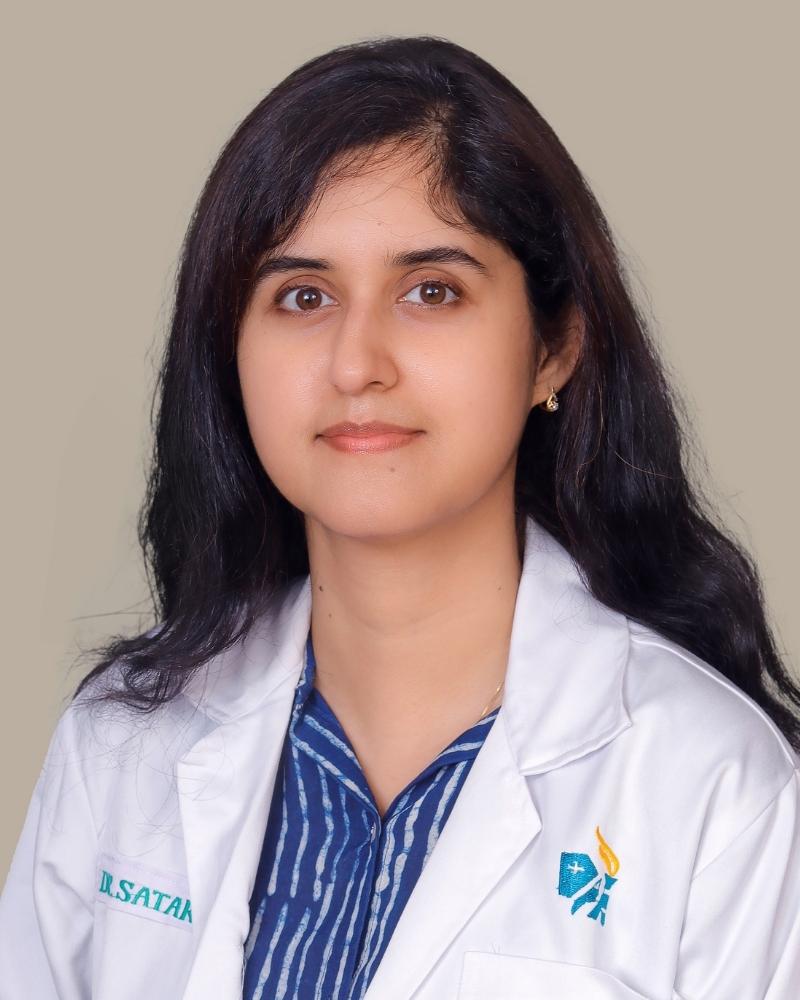
Dr. Sataksi Chatterjee
Consultant Head & Neck Surgeon
Dr. Sataksi Chatterjee is a Consultant Head and Neck Surgeon at Apollo Hospital, Navi Mumbai, with over a decade of experience in the surgical management of head and neck disorders. She completed her medical training at Bangalore Medical College and has received advanced training in both India and abroad in open and endoscopic approaches to head and neck cancers.
Her primary clinical and research interests include thyroid and parathyroid disorders, rare thyroid malignancies, postoperative calcium management following thyroid surgery, atypical presentations of parathyroid adenomas, and neoadjuvant immunotherapy for advanced thyroid cancers. Her work on poorly differentiated thyroid carcinoma has been published as a book chapter and in collaborative international studies.
Dr. Chatterjee serves as Assistant Program Director for the FHNO fellowship program, Course Coordinator for the cadaveric dissection course “Practice Essentials of Head and Neck,” and faculty for the DNB program at Apollo Hospitals. She also holds an honorary Associate Professorship with the Apollo Hospitals Educational and Research Foundation.
All Sessions by Dr. Sataksi Chatterjee
Early detection and management of oral cancers: Has the paradigm changed?
Early detection remains the most important determinant of survival in oral squamous cell carcinoma (OSCC). Traditionally, diagnosis has relied on clinical examination followed by biopsy and histopathological confirmation, with surgical excision as the cornerstone of treatment. However, recent advances in diagnostic technologies and therapeutic strategies suggest a potential paradigm shift in the management of early oral cancer. Minimally invasive approaches such as sentinel lymph node biopsy and personalised treatment strategies are reshaping management and reducing treatment-related morbidity. This presentation will review current evidence on evolving diagnostic and therapeutic approaches and critically evaluate whether these innovations represent a true paradigm shift in early oral cancer detection and management or an incremental refinement of existing practices.